


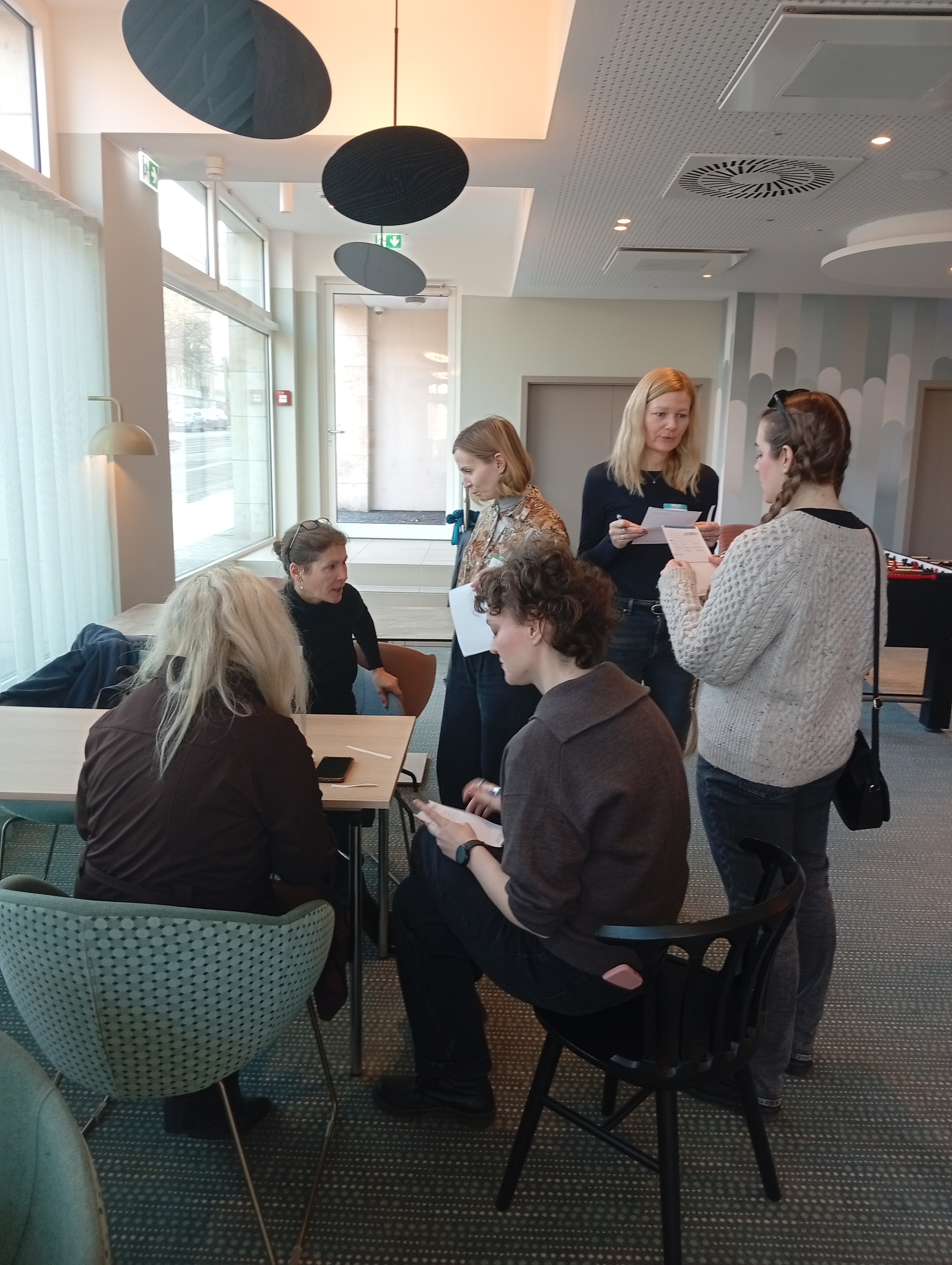
Whether you are a psychotherapist, artist, holistic practitioner, tradeswoman, social worker, care worker, language teacher, or humanities scholar—whether you are a single mother or a refugee woman: countlessly, women carry the main burden of our society. They keep communities warm, heal, care, create, teach, and generate real, tangible value.
Yet the market penalizes them with precarious contracts, administrative stress, unpaid preparation hours, and constant financial anxiety. For single mothers and refugee women, rigid bureaucratic hurdles, systemic discrimination, and a complete lack of a financial buffer make things even harder.
The neoliberal system tells us we just need to become more "resilient," book another mindfulness course, or optimize our time management. That is a smoke screen. Structural exploitation cannot be breathed away. Women are not the problem; the problem is an economic system that ruthlessly squeezes human labor and care work.
Fortunately, real-world alternatives already exist: structures where women come together to protect themselves from this permanent emergency state.
If you don't want to fight the system alone, there are already functioning networks and models across different fields:
Amidst all these inspiring models, we must be crystal clear about one thing: If a social or feminist project only functions because one single woman burns herself out for it, that is not solidarity—that is self-exploitation wrapped in a green ribbon.
Feminist economics requires a radical protection of personal boundaries. The concept for UNO.TEAM as a worker co-op is currently on ice for this exact reason: because the financial, conceptual, and emotional risks ended up landing on one person's shoulders rather than being distributed across the collective.
True solidarity requires everyone involved to step up, take responsibility, and carry their weight. Where that collective maturity is still developing, there is no shame in saying stop, stepping back, and channeling your energy into your own mental health and individual projects.
These structures and models offer women in all walks of life three crucial insights:
Whether you are a psychotherapist, artist, holistic practitioner, tradeswoman, social worker, care worker, language teacher, or humanities scholar—whether you are a single mother or a refugee woman: countlessly, women carry the main burden of our society. They keep communities warm, heal, care, create, teach, and generate real, tangible value.
Yet the market penalizes them with precarious contracts, administrative stress, unpaid preparation hours, and constant financial anxiety. For single mothers and refugee women, rigid bureaucratic hurdles, systemic discrimination, and a complete lack of a financial buffer make things even harder.
The neoliberal system tells us we just need to become more "resilient," book another mindfulness course, or optimize our time management. That is a smoke screen. Structural exploitation cannot be breathed away. Women are not the problem; the problem is an economic system that ruthlessly squeezes human labor and care work.
Fortunately, real-world alternatives already exist: structures where women come together to protect themselves from this permanent emergency state.
If you don't want to fight the system alone, there are already functioning networks and models across different fields:
Amidst all these inspiring models, we must be crystal clear about one thing: If a social or feminist project only functions because one single woman burns herself out for it, that is not solidarity—that is self-exploitation wrapped in a green ribbon.
Feminist economics requires a radical protection of personal boundaries. The concept for UNO.TEAM as a worker co-op is currently on ice for this exact reason: because the financial, conceptual, and emotional risks ended up landing on one person's shoulders rather than being distributed across the collective.
True solidarity requires everyone involved to step up, take responsibility, and carry their weight. Where that collective maturity is still developing, there is no shame in saying stop, stepping back, and channeling your energy into your own mental health and individual projects.
These structures and models offer women in all walks of life three crucial insights:


.jpeg)

.jpeg)