


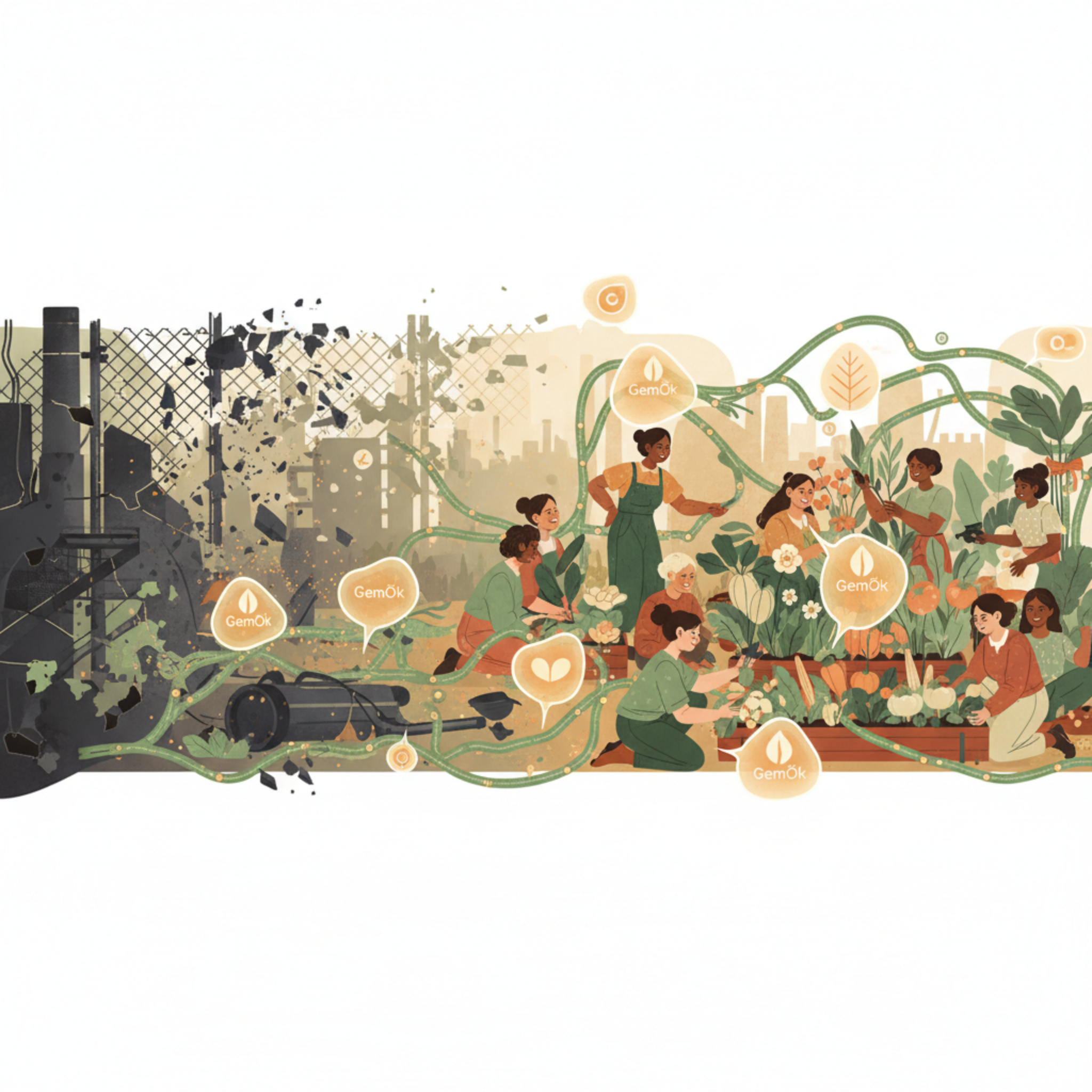
Every time we talk about scaling down industrial throughput and living within planetary boundaries, the established media triggers the exact same reflex: “Do you want to send us back to the Stone Age?”, “What about the loss of jobs?”, or “This will destroy our prosperity!”
This panic is not an accident; it is a calculated distraction. Degrowth isn't about moving backward or suffering through austerity. It is about stepping off a runaway treadmill that is destroying the living world while exhausting us daily.
As the economic anthropologist Jason Hickel powerfully demonstrates, our economic system is not a neutral vehicle for human wellbeing. It has morphed into a Juggernaut—a relentless, growth-obsessed machine operated by the Global North that is literally devouring the natural resources of the entire planet. To dismantle this Juggernaut, we first have to unlearn the myths that keep it running.
When conservative politicians decry the "loss of jobs," they treat wage labor as if it were humanity's highest calling. But if we look closer, the modern imperative to hold a "job" just to earn the right to exist is the contemporary manifestation of forced dependency.
How did we get here?
The brutal, violent restriction of access to the planet's shared resources created both our toxic reliance on endless wage labor and the systematic destruction of Earth's ecosystems.
Degrowth does not mean reducing the things that actually make human lives rich—like art, care, healthcare, education, or community. It means strategically scaling down the physical throughput of an economy that extracts far more than the Earth can ever regenerate.
Researchers and economists categorize this destruction into two interconnected fronts:
The Imperative: The Global North must reduce its overall material and energy throughput by 70% to 80%. This isn't about sacrifice; it's about making space for planetary recovery and global justice.
Recognizing these historical and physical truths is the absolute first step toward meaningful transformation. We must understand that exponential growth is not a law of nature; it is a political choice built on enclosure and extraction.
To ignore these connections out of apathy or comfort is to make a dangerous compromise. It means surrendering the future of our planet and our children to power-obsessed oligarchs—the Elon Musks and Jeff Bezoses of the world. These tech-feudalists have no interest in regenerating ecosystems or rebuilding the Commons. Their entire blueprint relies on expanding the Juggernaut, consolidating wealth, and escaping the consequences on private rockets or isolated estates.
Degrowth is ultimately a vision of abundance. When we stop producing useless planned-obsolescence goods, invasive advertising, arms, and luxury excess for billionaires, we reclaim something far more precious: our time, our energy, and our autonomy.
Transformation requires tangible alternative infrastructure:
Stopping the Juggernaut isn't the end of civilization. It is the beginning of our collective liberation.
Every time we talk about scaling down industrial throughput and living within planetary boundaries, the established media triggers the exact same reflex: “Do you want to send us back to the Stone Age?”, “What about the loss of jobs?”, or “This will destroy our prosperity!”
This panic is not an accident; it is a calculated distraction. Degrowth isn't about moving backward or suffering through austerity. It is about stepping off a runaway treadmill that is destroying the living world while exhausting us daily.
As the economic anthropologist Jason Hickel powerfully demonstrates, our economic system is not a neutral vehicle for human wellbeing. It has morphed into a Juggernaut—a relentless, growth-obsessed machine operated by the Global North that is literally devouring the natural resources of the entire planet. To dismantle this Juggernaut, we first have to unlearn the myths that keep it running.
When conservative politicians decry the "loss of jobs," they treat wage labor as if it were humanity's highest calling. But if we look closer, the modern imperative to hold a "job" just to earn the right to exist is the contemporary manifestation of forced dependency.
How did we get here?
The brutal, violent restriction of access to the planet's shared resources created both our toxic reliance on endless wage labor and the systematic destruction of Earth's ecosystems.
Degrowth does not mean reducing the things that actually make human lives rich—like art, care, healthcare, education, or community. It means strategically scaling down the physical throughput of an economy that extracts far more than the Earth can ever regenerate.
Researchers and economists categorize this destruction into two interconnected fronts:
The Imperative: The Global North must reduce its overall material and energy throughput by 70% to 80%. This isn't about sacrifice; it's about making space for planetary recovery and global justice.
Recognizing these historical and physical truths is the absolute first step toward meaningful transformation. We must understand that exponential growth is not a law of nature; it is a political choice built on enclosure and extraction.
To ignore these connections out of apathy or comfort is to make a dangerous compromise. It means surrendering the future of our planet and our children to power-obsessed oligarchs—the Elon Musks and Jeff Bezoses of the world. These tech-feudalists have no interest in regenerating ecosystems or rebuilding the Commons. Their entire blueprint relies on expanding the Juggernaut, consolidating wealth, and escaping the consequences on private rockets or isolated estates.
Degrowth is ultimately a vision of abundance. When we stop producing useless planned-obsolescence goods, invasive advertising, arms, and luxury excess for billionaires, we reclaim something far more precious: our time, our energy, and our autonomy.
Transformation requires tangible alternative infrastructure:
Stopping the Juggernaut isn't the end of civilization. It is the beginning of our collective liberation.


.jpeg)

.jpeg)